Confirm a piece of information
A few seconds
On an entry, every criterion carries a “still correct?” button. Answering it tells the next families that the information is recent. That is often what is missing most, more than the information itself.
AbleSpot knows nothing that a family has not told it. Every piece of information comes from someone who was there, and that is the only reason it can be trusted.
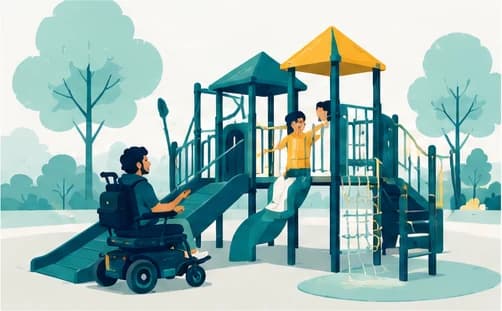
Places you set out for, where you stay an hour or an afternoon, and which have to be prepared before leaving.

A wildlife park, an aquarium
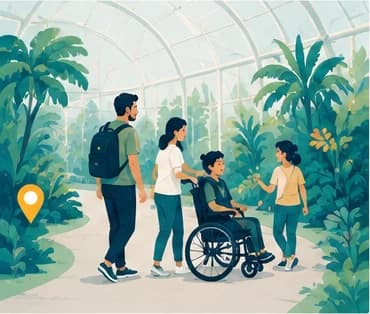
A glasshouse, a botanical garden
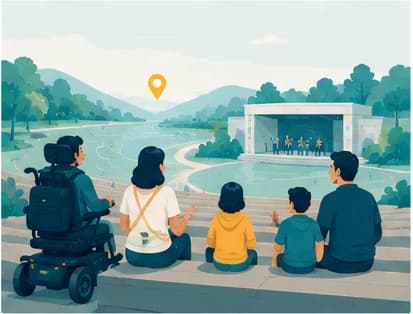
An open-air performance
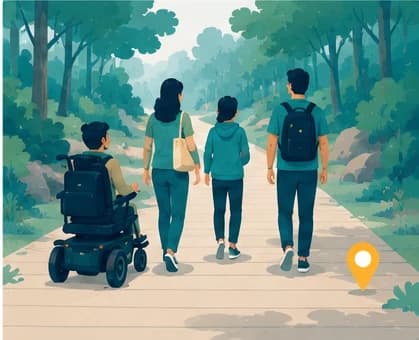
A woodland path, a walk
It is how long you stay. The longer it is, the more chances there are to give up: parking near the entrance, getting through the door, finding somewhere to change an older child, being able to step away when the noise becomes too much. An entry answers those questions before anyone drives thirty kilometres.
So a café or a restaurant belongs here when it is part of the outing. A place is not listed because it exists, but because you take your family there.
When in doubt, suggest it. Every suggestion is reviewed before publication: deciding is the moderators' job, not yours.
A door that is too narrow is not something you learn from an official website: you find out at the entrance, with a child in the car and an outing falling through. What you know about a place spares someone else exactly that.
The information that is missing most is not what you would expect. The width of a door, the slope of a path, how loud a room gets at three in the afternoon, the parking space that exists but cannot be seen from the street: none of that appears in a brochure.
And it works both ways. The place you describe today may well have been described for you last week by someone else.
Five things you can do, from the shortest to the longest. None is required, and the first alone is already useful.
A few seconds
On an entry, every criterion carries a “still correct?” button. Answering it tells the next families that the information is recent. That is often what is missing most, more than the information itself.
One to two minutes
There are forty-nine criteria: ramp, lift, door width, accessible toilets, large changing table, quiet room, wheelchair loan, parking. Answer the ones you saw, leave the rest on “Not documented”.
Five minutes
What went well, what got in the way, the child's age if it changes how to read it. The comment is what counts, not the rating: a place is not “good” or “bad”, it suits or it does not, and not the same people.
As long as it takes to shoot
The entrance, the ramp, the toilets, the quiet room. A photo of the way in says more than a paragraph, and is read in a second. The location data your phone adds to it is stripped before saving.
Five to ten minutes
A place that is missing, and you are the only one who can say so. The form takes five steps, and the summary lets you re-read everything before sending.
No medical information: no diagnosis, no condition, no disability percentage, neither yours nor your child's. The site reasons only in practical needs: a manual wheelchair, a transfer that is not possible, a need for quiet.
No expertise. You do not have to measure a slope or know a standard. “The ramp worked with the powered wheelchair” is a perfectly usable piece of information.
No completeness. An incomplete entry is already useful. What is missing will be filled in later, by you or by someone else. That is the very principle of the site.

A suggested place and a submitted review are reviewed by the team before being published. You find your suggestions again on your account, and you can withdraw those still waiting.
Accessibility criteria, on the other hand, are published straight away: they are the heart of the site, and holding them back would empty it of its purpose. Each value shows its source (family, establishment or team), so the reader knows where it comes from.
Nothing is final. Wrong information can be corrected, a change keeps a record of what was altered, and a withdrawn suggestion is never destroyed.
Then leave the criterion on “Not documented”. That is an honest answer, and it is worth more than a guess: someone will decide on an outing from what you write.