Places that are genuinely accessible
Go out more often, without going in blind.
Finding an idea is hard enough. Knowing whether you can really spend two hours there - change him, step away if it gets too much, park close - is another matter. Here, families write down what they checked on the spot.
“Accessible” doesn't tell you much.
A cinema can be advertised as accessible and have nowhere to change a ten-year-old. A museum can have a lift and a noise level nobody can bear.
What decides an outing is not whether the building complies. It is: can he stay in his wheelchair, or does he have to be transferred? Is there a corner to step away to when it gets too much? Do you park thirty metres away, or three hundred? Can you warm up a meal, keep medication cold?
And what decides it for one family does not decide it for the next.
In practice, here is what we look at.
The six criteria the search puts up front, among the 49 the site records place by place, with the source and the date.

A powered wheelchair that fits
Its width, its weight, and the ground it needs under the wheels.
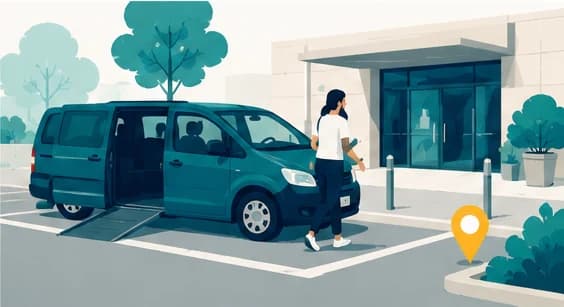
A space by the entrance
Thirty metres is not three hundred.
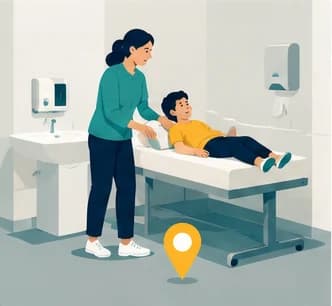
An adult changing table
To change an older child without using the floor.
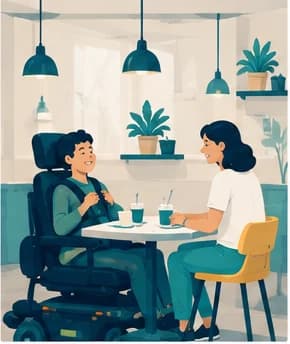
Staying in the wheelchair
A table you can pull up to, with no transfer to negotiate.

Somewhere to withdraw to
Away from the noise, when the day gets too much.
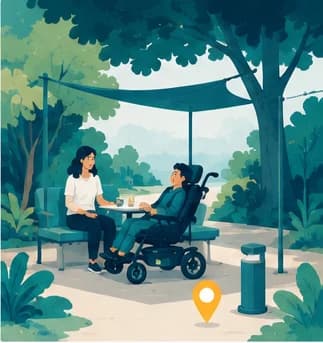
A place that is not loud
Background noise turns an outing into an ordeal.
The detail, not the label.
Every piece of information is recorded on its own, with its value, its source and its date.
The five possible answers
The same ones you will see on every entry. Two of them are often mixed up, and they do not mean the same thing at all.
- Accessible
- The criterion is met, someone saw it on the spot.
- Not accessible
- The criterion is not met. An answer as useful as the previous one.
- Partially
- Partly met, or under conditions. The comment says which.
- Not applicable
- The question makes no sense for this place: a lift in a single-level park.
- Not documented
- Nobody has looked yet. It is not a “no”, it is a blank.
A few criteria name an obstacle rather than a feature: a steep slope, narrow passages. Those are answered yes or no, and here “no” is the good news.
“Not documented” is an honest answer. Nobody knows everything.
The example is momentarily unavailable.
What gets recorded, one detail at a time
The criteria reference list is momentarily unavailable.
You know who said what, and when.
A family passing through
Reported by the community
The venue itself
Declared by the organisation
Information ages. Building work, a broken lift, a changed opening time: every piece carries its date, and other families can confirm or correct it.
What we mean by an outing.
Places you set out for, where you stay an hour or an afternoon, and which have to be prepared before leaving.
A wildlife park, an aquarium
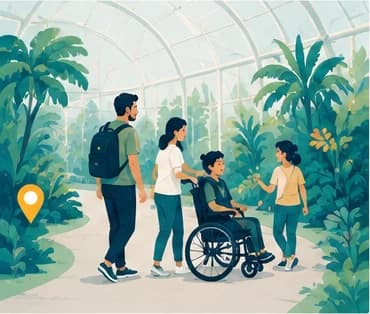
A glasshouse, a botanical garden
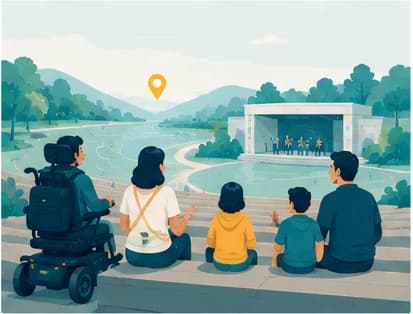
An open-air performance
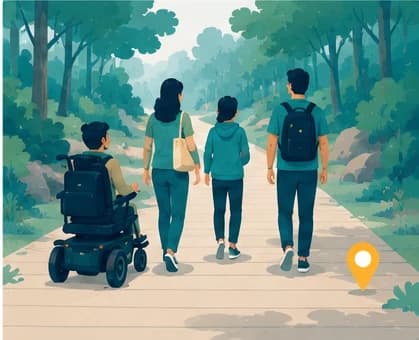
A woodland path, a walk
The question is not what kind of place it is
It is how long you stay. The longer it is, the more chances there are to give up: parking near the entrance, getting through the door, finding somewhere to change an older child, being able to step away when the noise becomes too much. An entry answers those questions before anyone drives thirty kilometres.
So a café or a restaurant belongs here when it is part of the outing. A place is not listed because it exists, but because you take your family there.
What you know, another family is looking for tonight.
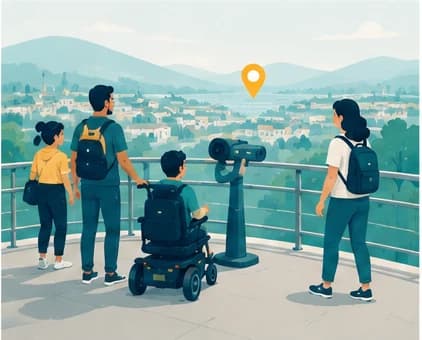
Just back from an outing? Two minutes are enough: say whether there was somewhere to change him, whether you could stay in the wheelchair, whether the noise was bearable, whether the staff were decent.
You don't need to know everything. An incomplete listing is already useful - what is missing will be filled in later, by you or by someone else.
What you will not find here.
No adverts, no subscription.
Nothing is for sale, here or anywhere else.
No medical data.
We never ask for a diagnosis. We talk about practical needs: a wheelchair, a transfer that is not possible, a need for quiet.
No rating out of five stars.
A place is not “good” or “bad”: it suits, or it does not, and not the same people.
No promise of full accessibility.
Enough to decide with, not a guarantee.
Do you run a venue?
You can claim its listing and keep its information up to date. It is free and it will stay free. What you state appears as coming from the venue: families can see the difference.
The site is starting out.
The starting entries come from OpenStreetMap: ten French cities, and the largest cities of some forty European countries. They are incomplete. They hold only what OpenStreetMap states, never what could be assumed. The rest is written by the people who use the site. If you know a place, or what is missing from an entry, add it.
No place published within this radius yet.